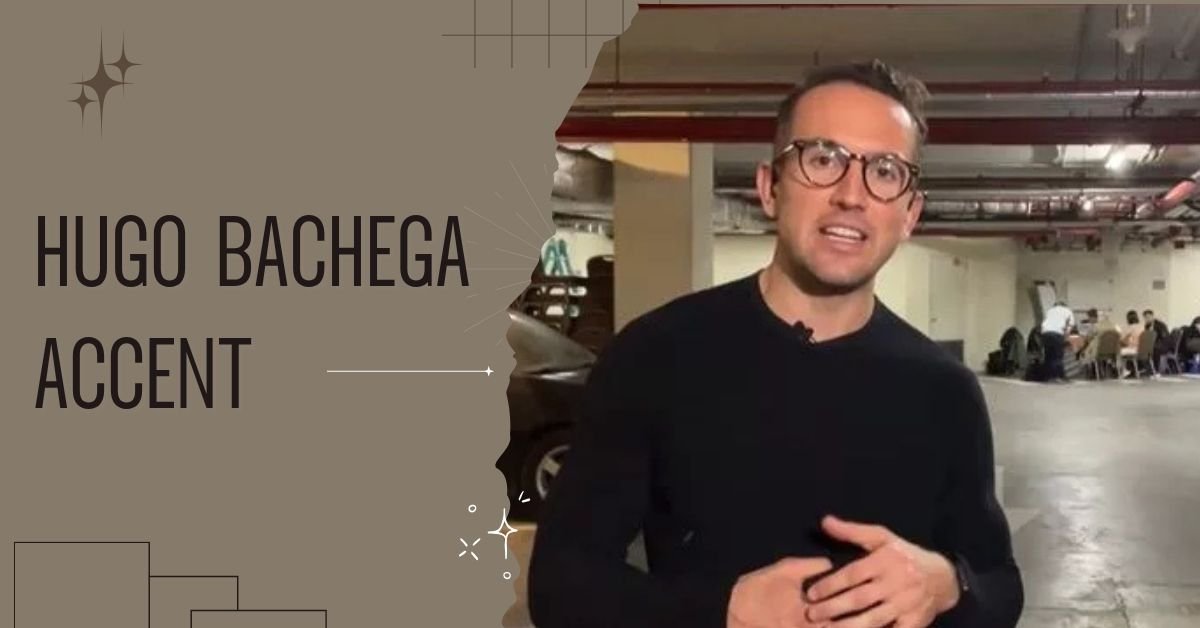
When a journalist reports from the front lines of global conflicts, their words carry immense weight. For viewers of the BBC, Hugo Bachega has become a familiar face, delivering powerful reports from war-torn regions like Ukraine. His compelling storytelling and brave journalism are undeniable. Yet, alongside discussions of his reporting, a different question frequently emerges in online forums and social media threads: “What is the origin of Hugo Bachega’s accent?”
This widespread curiosity speaks to the unique quality of his speech—a blend of influences that isn’t immediately placeable. Is he British? South American? European? This article aims to answer that very question. We will explore the background of this distinguished journalist, delving into his nationality, his linguistic roots, and the professional journey that has shaped him into the correspondent we see on our screens today. By understanding his story, we can gain a deeper appreciation for both his unique accent and his impactful career.
Contents
Who is Hugo Bachega? A Journalist on the Front Lines
Hugo Bachega is a prominent international correspondent for BBC News. He has garnered significant recognition for his extensive and courageous coverage of the war in Ukraine, often reporting directly from active conflict zones. His work provides a vital window into the human impact of the war, bringing stories of resilience, loss, and survival to a global audience.
Before his current role, Bachega served as a BBC correspondent in various capacities, demonstrating a deep commitment to international journalism. His assignments have taken him across the globe, covering major events and complex issues. It is this dedication to on-the-ground reporting that has cemented his reputation as a trusted and authoritative voice in news.
The Rise of a Public Figure
While Bachega has been a respected journalist for years, his profile skyrocketed with the full-scale invasion of Ukraine in February 2022. As one of the key BBC correspondents stationed in the country, his dispatches became a daily fixture for millions. His calm demeanor while reporting under extreme pressure, often with the sounds of air raid sirens in the background, highlighted his professionalism and bravery. This constant presence on a major global news story naturally led to increased public interest not just in his work, but in the man himself.
Decoding the Hugo Bachega Accent: A Linguistic Puzzle
The primary source of public curiosity surrounding Hugo Bachega is his distinct accent. It contains elements that are familiar to English speakers, yet it has a cadence and phonetic quality that are difficult to pinpoint. Viewers often describe it as a mix of British English with hints of another European language, possibly Portuguese or another Romance language.
This linguistic ambiguity is what makes his accent so fascinating. Unlike a standard Received Pronunciation (RP) or a clear American accent, Bachega’s speech pattern invites speculation. It is polished and articulate, as expected of a BBC correspondent, but it retains a unique flavor that hints at a multilingual background.
What Makes His Accent Stand Out?
Several linguistic features contribute to the uniqueness of Bachega’s accent:
- Vowel Pronunciation: Listeners may notice subtle differences in how he pronounces certain vowels compared to a native British English speaker. This is often a tell-tale sign of a speaker whose mother tongue is not English.
- Rhythm and Intonation: The musicality or “prosody” of his speech sometimes reflects patterns found in other languages. The rise and fall of his pitch can differ from standard English, adding to its distinctive quality.
- Consonant Sounds: While his command of English is flawless, minor variations in consonant sounds, such as the “th” or “r” sounds, can sometimes signal a non-native speaker who has achieved an exceptionally high level of fluency.
These elements combine to create a sophisticated “Euro-English” accent, a term often used to describe the clear, yet non-native, English spoken by many highly educated Europeans. It is a testament to his linguistic skill that his accent is both unique and perfectly understandable to a global audience.
The Answer to the Mystery: Hugo Bachega’s Nationality and Roots
The key to understanding Hugo Bachega’s accent lies in his nationality. Hugo Bachega is Brazilian. Born and raised in Brazil, his first language is Portuguese. This fact immediately clarifies the subtle linguistic influences that viewers detect in his English.
Brazil, a country with a rich and diverse cultural heritage, is the largest nation in South America. Its official language, Portuguese, is a Romance language with a distinct phonetic and rhythmic structure compared to English. Knowing that Bachega’s linguistic foundation is Brazilian Portuguese provides the context needed to deconstruct his accent.
The Influence of Brazilian Portuguese on His English
When a native Portuguese speaker learns English to a high level, certain linguistic traits from their first language often carry over. This is not a matter of making “errors,” but rather a natural fusion of language systems.
Here are some common characteristics of a Portuguese-influenced English accent that align with what we hear from Hugo Bachega:
- Vowel Sounds: Portuguese has a different vowel inventory than English. A native Portuguese speaker might pronounce certain English vowels in a way that is closer to their Portuguese counterparts, leading to the subtle variations viewers notice.
- Cadence and Flow: Brazilian Portuguese is often described as having a more melodic, syllable-timed rhythm, whereas English is a stress-timed language. This can influence the rhythm of Bachega’s spoken English, giving it a unique flow.
- The “L” Sound: In many Brazilian dialects, the “l” at the end of a syllable is often pronounced like a “w.” While Bachega’s English is incredibly polished, this foundational aspect of his native tongue could subtly influence his articulation.
Therefore, the accent that has sparked so much discussion is that of a highly educated, multilingual individual whose mother tongue is Brazilian Portuguese and who has mastered English to an exceptional degree, likely refining it further through education and work in the United Kingdom.
The Career Journey of Hugo Bachega: From Brazil to the BBC
Hugo Bachega’s path to becoming a leading BBC correspondent is a story of ambition, hard work, and a global mindset. Understanding his professional journey helps to explain how he developed his distinctive communication style.
Early Life and Education
While specific details about his early life in Brazil are not widely publicized, it is clear that Bachega received a strong educational foundation. His journey into international journalism began in earnest when he moved to the United Kingdom to pursue higher education.
He holds a Master’s degree in International Relations from the prestigious London School of Economics and Political Science (LSE). This academic background provided him with a deep understanding of the global political landscape, a crucial asset for an international correspondent. It was during his time in London that he would have immersed himself fully in the English language and British culture, honing the linguistic skills necessary for a career in broadcast journalism at the highest level.
Starting a Career at the BBC
Bachega began his career at the BBC, initially working for the BBC World Service. This is a common starting point for many of the corporation’s international journalists. The BBC World Service broadcasts in multiple languages, and Bachega’s Brazilian roots and fluency in Portuguese would have been a significant advantage.
He held several roles within the organization, including producer and reporter. His early work often focused on Latin American affairs, leveraging his cultural and linguistic expertise. He served as a correspondent in Brazil, covering major stories such as the 2014 World Cup, the 2016 Rio Olympics, and the political turmoil that gripped the country during that period.
Rise to International Prominence
After establishing himself as a reliable and insightful correspondent in South America, Bachega’s career took on a more global focus. He was eventually posted to other regions, covering a wide range of international stories. His move to cover the conflict in Ukraine marked a pivotal moment in his career.
Reporting from a war zone requires a unique skill set: bravery, empathy, clarity under pressure, and the ability to convey complex situations to a broad audience. Bachega has demonstrated all these qualities in his reporting from Kyiv, Kharkiv, and other key locations in Ukraine. His work has been crucial in helping the world understand the realities of the war, earning him widespread respect and a place among the BBC’s most trusted front-line journalists.
The Importance of Diversity in News Reporting
The discussion around Hugo Bachega’s accent, while born of simple curiosity, highlights a more significant point: the value of diversity in international news. In an increasingly interconnected world, having journalists with diverse national, cultural, and linguistic backgrounds enriches the quality and perspective of news coverage.
A correspondent like Hugo Bachega brings more than just the ability to report in English. He brings a worldview shaped by his experiences as a Brazilian, a deep understanding of different cultures, and the ability to connect with people from various walks of life. His multilingualism is an asset, allowing for more nuanced interviews and a deeper grasp of the local context in many situations.
The fact that the BBC, a quintessentially British institution, features correspondents with diverse accents is a sign of a modern, global media organization. It reflects the reality that English is a world language, spoken with many different accents. By embracing this diversity, news organizations can better connect with their global audience and provide more authentic and comprehensive reporting.
Conclusion
The curiosity surrounding Hugo Bachega’s accent is understandable. It is a unique and pleasant-sounding blend that reflects his life’s journey: a Brazilian who pursued education in the UK and built a career as a world-class international journalist. His accent is the audible story of his background—rooted in Portuguese, perfected in English, and now broadcast to millions from the most challenging environments on the planet.
Ultimately, however, Hugo Bachega is defined not by how he speaks, but by what he says and the work he does. He is a journalist of immense courage and integrity, whose reporting from Ukraine has provided indispensable insight into one of the most significant geopolitical events of our time. While the mystery of his accent is now solved, the focus should rightly remain on the substance of his journalism and the powerful stories he continues to bring to the world.
As you continue to watch his reports from the front lines, we encourage you to listen with this new understanding. Appreciate the unique blend of influences in his speech as a symbol of the global nature of modern journalism, and most importantly, value the critical work he and his colleagues do to keep us informed.