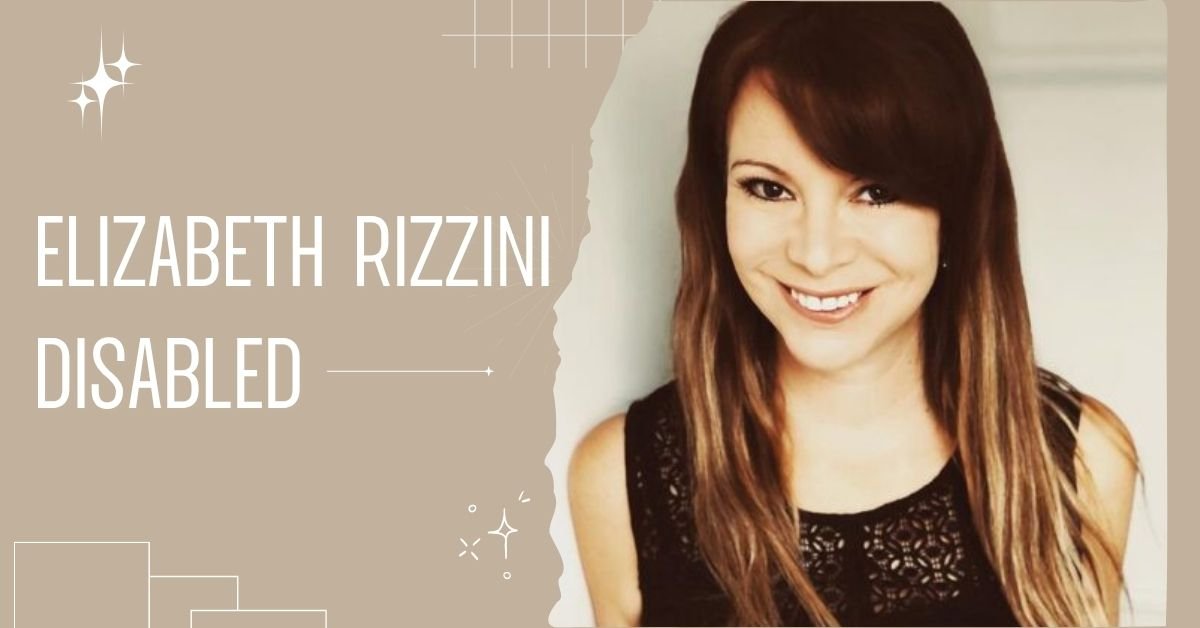
The world of television often makes us curious about the people we see on screen every day. Among those familiar faces is Elizabeth Rizzini, a well-known BBC weather presenter whose calm delivery and cheerful personality have made her a favorite among viewers. However, in recent months, there has been a growing wave of online speculation regarding her physical health — particularly questions such as “Is Elizabeth Rizzini disabled?”
Rumors like these can spread quickly in the digital age, often without much evidence or context. That’s why it’s important to take a closer look at who Elizabeth Rizzini really is, her career background, and the truth behind the speculation surrounding her. This article provides a complete, factual, and compassionate look into these questions — clearing the air with verified details and professional insights.
Contents
- 1 Who Is Elizabeth Rizzini?
- 2 The Origins of the Disability Rumors
- 3 What We Know About Elizabeth Rizzini’s Health
- 4 Why Viewers Might Have Misunderstood
- 5 A Closer Look at Her Relationship with Frank Gardner
- 6 Media Representation and Misconceptions About Disability
- 7 Comparing Fact and Fiction: Clarifying the Truth
- 8 The Role of Privacy and Public Curiosity
- 9 Why Disability Rumors Persist About Public Figures
- 10 The Importance of Accurate Information in Journalism
- 11 Elizabeth Rizzini’s Professional Journey and Resilience
- 12 How Public Perception Shapes a Presenter’s Image
- 13 Lessons from the Elizabeth Rizzini Disability Rumor
- 14 Conclusion:
Who Is Elizabeth Rizzini?
Elizabeth Rizzini is a highly respected British weather presenter best known for her work with BBC London News. Over the years, she has become a familiar figure for millions of viewers who tune in to the BBC’s regional and national broadcasts. Her professional presentation style, combined with her approachable manner, has helped her build a loyal audience.
Before joining the BBC, Elizabeth had a rich background in broadcasting and meteorology. She trained and worked extensively within the BBC’s weather division, learning how to communicate complex weather information in a way that viewers could easily understand. Her professionalism and warmth quickly made her a recognizable face within the network.
While she is best known for her on-screen work, Elizabeth’s personal life has also been a topic of public interest, particularly her relationship with former astronaut and BBC journalist Frank Gardner. However, despite her visibility, Elizabeth has always maintained a sense of privacy, choosing to keep her personal details away from unnecessary media attention.
This balance between professionalism and privacy is one reason why speculations — including those about her health — tend to arise. But as we’ll explore below, much of what has circulated online about Elizabeth’s physical condition is based on misunderstanding or false assumptions.
The Origins of the Disability Rumors
The question, “Is Elizabeth Rizzini disabled?” did not emerge from any official source or statement. Instead, it seems to have originated from casual discussions across social media platforms and online forums where viewers speculated about her appearance or mannerisms.
In television, viewers often notice the smallest details — a change in someone’s posture, a difference in gait, or even variations in their on-screen presence. These details can sometimes lead to speculation, especially when the individual in question has a relatively private personal life.
For Elizabeth Rizzini, some online observers suggested she may have a disability based on her posture during broadcasts or her camera angles in certain segments. However, such assumptions have no factual backing. There has been no official confirmation or public acknowledgment by Elizabeth or the BBC indicating that she lives with a disability.
It’s important to recognize how easily rumors can evolve in today’s media landscape. When a public figure like Elizabeth Rizzini does not address speculation directly, some people may fill in the blanks themselves. Yet silence should never be mistaken for confirmation — especially when dealing with something as sensitive as a person’s health.
What We Know About Elizabeth Rizzini’s Health
As of the latest available information, there is no evidence that Elizabeth Rizzini is disabled or dealing with any long-term health condition. She continues to appear regularly on BBC broadcasts, delivering weather updates with the same clarity and professionalism that have defined her career for years.
Her consistent presence on air suggests she is healthy and active in her work. Public appearances, interviews, and social events further reinforce that she is living a balanced life both professionally and personally.
Of course, like any individual, Elizabeth may experience everyday health fluctuations, but there is no verified report or credible news indicating she suffers from a disability or chronic illness. The rumors appear to have emerged purely from speculation rather than from facts or official statements.
Why Viewers Might Have Misunderstood
There are several possible reasons why some people may have misunderstood Elizabeth Rizzini’s situation. In the world of television, appearances can often be misleading. Camera angles, lighting, wardrobe choices, or even the way a person stands during a live broadcast can sometimes be interpreted in ways that lead to speculation.
In Elizabeth’s case, a few broadcasts where she appeared to shift her weight or stand in a particular way might have led to false assumptions about her physical health. However, broadcasters often stand for long hours during live presentations, and such postural adjustments are completely normal.
Another factor could be her association with Frank Gardner, the BBC’s security correspondent who is paralyzed from the waist down following a 2004 shooting incident in Saudi Arabia. Some online users may have mistakenly connected Elizabeth’s relationship with Gardner to her own health, leading to assumptions that both share similar physical challenges. In truth, Elizabeth herself has never reported or displayed any sign of disability.
This highlights an important point about modern media culture — how quickly assumptions can spread without fact-checking, particularly when they involve well-known personalities.
A Closer Look at Her Relationship with Frank Gardner
Elizabeth Rizzini’s relationship with Frank Gardner has often been discussed in the media, primarily because both are BBC journalists and familiar figures to the British public. Gardner, who became paralyzed after surviving a terrorist attack in 2004, has spoken publicly about his injury, his recovery, and his life since the incident.
When reports surfaced in 2019 and 2020 that Elizabeth and Frank were in a relationship, some online discussions misinterpreted this connection. A few social media posts even speculated that Elizabeth might share or understand Gardner’s experiences due to having a disability herself — a claim with no factual foundation.
While the couple’s relationship garnered attention, both have handled public curiosity with grace. They’ve maintained professional boundaries while occasionally appearing together at public events. Elizabeth’s role as a weather presenter remains separate from Gardner’s journalistic focus on global security issues.
Their connection is a personal matter and should not be used as a basis for speculation about either individual’s health. It’s worth emphasizing that Elizabeth Rizzini is not disabled, and any assumption otherwise is unfounded.
Media Representation and Misconceptions About Disability
The speculation surrounding Elizabeth Rizzini touches on a broader issue — how society perceives and discusses disability, especially concerning public figures. In media, people are often judged by appearance or behavior, and when something doesn’t fit a viewer’s expectations, they may jump to conclusions.
This reaction is amplified in the age of social media, where opinions can spread far faster than verified information. For instance, a single tweet or TikTok comment can generate thousands of impressions, quickly evolving into a narrative of its own.
Public figures like Elizabeth Rizzini often find themselves at the center of such speculation, not because of anything they have said or done, but because of how viewers interpret their appearances. It’s a reminder of the importance of empathy and responsibility when discussing other people’s health — particularly in the digital space.
By separating fact from rumor, we contribute to a more respectful and informed conversation about disability representation in media.
Comparing Fact and Fiction: Clarifying the Truth
To put things in perspective, the following table summarizes what is factually verified versus what is rumor-based regarding Elizabeth Rizzini’s supposed disability:
| Aspect | Verified Fact | Rumor / Misunderstanding |
|---|---|---|
| Health status | No official report of any disability or chronic illness. | Claims online that she may have a disability. |
| BBC career | Active BBC weather presenter with regular appearances. | Some assumed she reduced work due to health issues — not true. |
| Relationship with Frank Gardner | Reported romantic connection; both respected BBC journalists. | Misinterpreted as shared disability experience. |
| Public statement | No comment suggesting any health condition. | Speculations filled the silence with false assumptions. |
| On-screen appearance | Professional and consistent; no visible indicators of physical disability. | Overanalyzed posture or camera angles leading to false conclusions. |
This side-by-side view shows how misinformation can arise from innocent observations but become misleading when not verified. The truth is simple: Elizabeth Rizzini is not disabled, and there is no credible information suggesting otherwise.
The Role of Privacy and Public Curiosity
Celebrities and television personalities like Elizabeth Rizzini face an ongoing challenge — maintaining personal privacy in a world where everything is instantly visible and shareable. Viewers form connections with presenters they see daily, often feeling as if they personally know them. While this familiarity creates loyalty, it can also blur boundaries between professional life and private matters.
When a broadcaster chooses not to reveal personal details, that choice is often driven by a desire for normalcy. Unfortunately, some audiences interpret this privacy as secrecy, sparking curiosity and, occasionally, rumor. Elizabeth’s silence on matters of health or family should be viewed as a right to privacy rather than as a sign of concealment.
In journalism, particularly within the BBC, professionalism is closely linked with maintaining boundaries between one’s personal and public identity. Elizabeth Rizzini exemplifies that principle by allowing her work to speak for itself, rather than engaging with every piece of speculation about her life.
Why Disability Rumors Persist About Public Figures
It might seem surprising that in an age of widespread information access, false rumors still spread so easily. Yet, in reality, online speculation about health or disability remains common, especially concerning public personalities. There are several psychological and social reasons behind this pattern.
First, audiences often project familiarity onto the people they watch regularly. A slight change in appearance or behavior might stand out, leading viewers to guess or comment about the cause. This type of “parasocial interaction” — where viewers feel connected to someone they’ve never met — can unintentionally create an environment ripe for assumptions.
Second, the media landscape thrives on engagement. Content that provokes curiosity or emotion — even if based on rumor — tends to attract clicks and comments. When a few online posts question whether someone like Elizabeth Rizzini has a disability, others join in, either to speculate further or to express concern. Over time, the repetition gives the rumor undeserved credibility.
Lastly, misinformation persists because of a lack of corrective voices. Public figures often avoid responding to such claims to protect their privacy, but their silence can be misinterpreted as validation. In Elizabeth’s case, her professionalism and discretion may have unintentionally allowed the rumor to linger — even though it holds no truth.
The Importance of Accurate Information in Journalism
As a BBC professional, Elizabeth Rizzini represents the value of accuracy and reliability, which are fundamental principles of journalism. Ironically, those same principles are sometimes neglected when discussing journalists themselves. This discrepancy underlines the importance of verifying facts before forming opinions about anyone in the public eye.
In today’s media environment, misinformation can harm reputations, influence public perception, and even impact mental health. For presenters like Rizzini, whose careers depend on credibility, unverified rumors can be particularly frustrating.
Responsible reporting — both by official outlets and by audiences sharing information online — plays a vital role in protecting truth and respect. Before repeating or believing something seen on social media, it’s worth asking: Is this verified? Has it been confirmed by a reliable source?
In the case of Elizabeth Rizzini, the answer is clear: no verified evidence supports any claim of disability.
Elizabeth Rizzini’s Professional Journey and Resilience
Looking beyond the rumors, Elizabeth Rizzini’s career offers a story of hard work, expertise, and dedication. Joining the BBC after training in meteorology, she has spent years mastering the art of weather communication — translating scientific forecasts into accessible information for the public.
Her calm presence on screen reflects years of experience. Unlike sensationalist presenters, Rizzini embodies a classic BBC style: measured, informative, and dependable. She also frequently participates in community outreach and educational initiatives that aim to make weather science more understandable to everyday viewers.
This long-standing professional consistency serves as indirect evidence of her good health and well-being. Maintaining a demanding broadcasting schedule, often involving early mornings and unpredictable hours, would be particularly challenging for someone managing a serious physical disability. Her active participation in both work and public events reflects vitality, not impairment.
How Public Perception Shapes a Presenter’s Image
Television presenters live in a unique space between celebrity and professionalism. They are recognized by face and name, yet they are not typically followed by paparazzi or engaged in entertainment gossip — unless curiosity drives it. In Elizabeth’s case, her composed and modest demeanor invites respect but can also lead to speculation precisely because she avoids personal publicity.
Public perception, therefore, becomes a powerful force. When people see a figure as graceful and composed, they may interpret that composure as fragility or delicacy, especially among women in media. These subtle biases can influence how viewers interpret even the most mundane physical details.
By understanding how these perceptions work, we can better appreciate why such rumors arise and why they should be challenged with empathy and factual awareness. Elizabeth Rizzini’s situation demonstrates the importance of recognizing public figures as professionals first and private individuals second.
Lessons from the Elizabeth Rizzini Disability Rumor
The discussion surrounding Elizabeth Rizzini’s supposed disability highlights several broader lessons about media literacy and social responsibility.
First, it shows the importance of verifying information before sharing it. Even small assumptions, when repeated across multiple platforms, can distort someone’s image and spread misinformation.
Second, it reminds us that health and disability are deeply personal topics. Speculating about them publicly — especially without evidence — can be invasive and disrespectful. Every individual, whether a television presenter or an ordinary citizen, deserves dignity and privacy regarding their health.
Finally, it underscores the need for compassion in online communication. Behind every public persona is a human being who reads, hears, and feels the effects of public commentary. In Elizabeth’s case, the kindest and most accurate answer to the question “Is Elizabeth Rizzini disabled?” is a simple and factual one: No, she is not.
Conclusion:
To conclude, the question “Is Elizabeth Rizzini disabled?” has circulated online without any foundation in fact. After reviewing all available evidence, professional records, and public appearances, the answer is clear: Elizabeth Rizzini is not disabled.
She continues to thrive in her role as a BBC weather presenter, admired for her professionalism, poise, and expertise. The rumors appear to have stemmed from misinterpretations of her appearance, association with Frank Gardner, and the natural curiosity surrounding public figures.
In an era where speculation spreads faster than truth, this situation reminds us to approach such questions with care. Health and disability are personal matters that deserve privacy and respect, especially when there is no credible evidence to suggest otherwise.
Elizabeth Rizzini remains a respected journalist, a dedicated broadcaster, and a reminder that integrity and professionalism can withstand even the most persistent online rumors. Rather than focusing on unfounded claims, audiences can continue to appreciate her for what she truly is — a talented communicator who brings clarity and warmth to the BBC weather forecast every day.