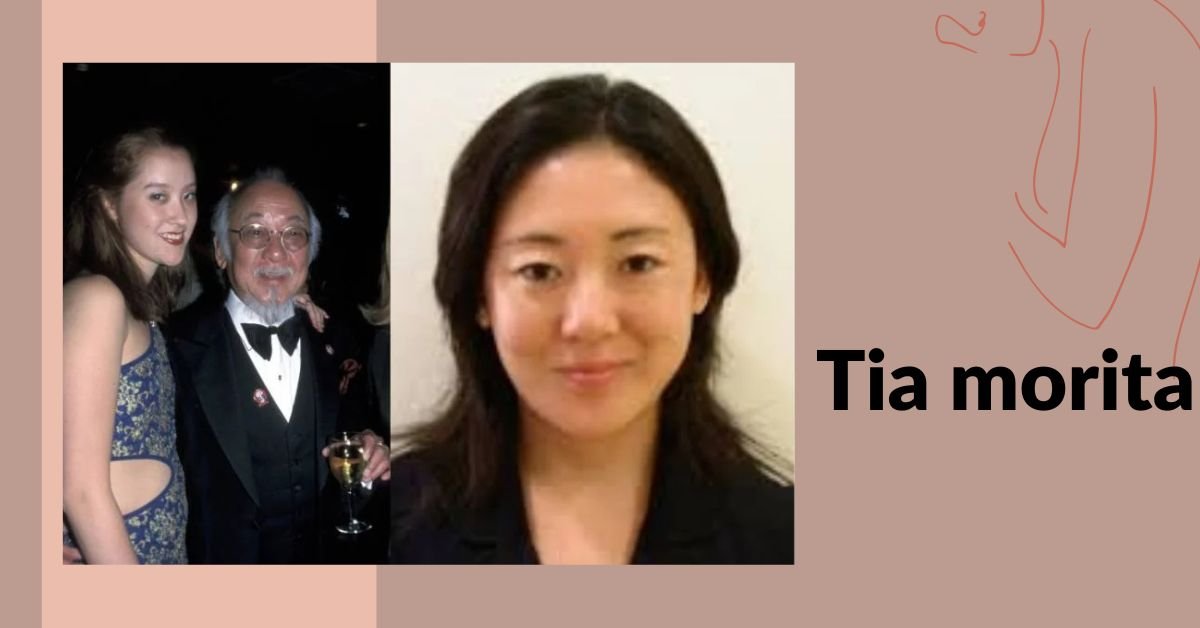
When a name is associated with Hollywood royalty, it often carries a weight of expectation and public curiosity. For Tia Morita, being the granddaughter of the beloved actor Pat Morita, known for his iconic role as Mr. Miyagi in The Karate Kid, could have defined her entire life. However, Tia has forged a distinct and impactful path of her own, far from the glitz of Hollywood. Her journey is a compelling story of intellect, passion, and a commitment to using technology for the greater good. This is the story of Tia Morita, a leading GIS specialist whose work in public infrastructure, urban planning, and disaster preparedness is creating a legacy built on data, innovation, and service.
This article explores the multifaceted life of Tia Morita. We will delve into her unique upbringing, her deliberate pivot into the world of Geographic Information Systems (GIS), and her significant contributions to critical public sectors. Her career demonstrates how spatial data can solve real-world problems, making our communities safer, more efficient, and better prepared for the future.
Contents
From a Famous Family to a Personal Calling
Growing up with a connection to a figure as famous as Pat Morita was anything but ordinary. While the name opened doors and sparked conversations, it also came with the shadow of a celebrated public persona. Pat Morita’s career was a landmark for Asian American representation in Hollywood, and his legacy is one of humor, wisdom, and warmth. For Tia, this heritage was a source of pride, but it was not the path she envisioned for herself.
The Influence of a Legacy
The values instilled by her family, particularly the discipline and dedication her grandfather exemplified in his craft, undoubtedly influenced Tia. Pat Morita’s journey from a child battling spinal tuberculosis to an Oscar-nominated actor was a testament to his resilience and work ethic. These qualities—perseverance, attention to detail, and a desire to make a meaningful impact—became foundational pillars in Tia’s own life.
Instead of being drawn to the creative arts, Tia found her passion in the analytical and problem-solving realms of science and technology. She recognized early on that her skills were best suited for a field where data could be translated into tangible solutions. This realization marked the beginning of a deliberate journey away from the expected and toward a career that was uniquely hers. Her choice was not a rejection of her family’s legacy but an evolution of it, channeling the same drive into a different field to create a different kind of impact.
Choosing a Path of Substance
Tia pursued higher education with a focus on geography and technology, which led her to the burgeoning field of Geographic Information Systems. GIS was the perfect intersection of her interests: it combined data analysis, cartography, and computer science to help people visualize and understand complex spatial relationships. It was a field where she could see the direct results of her work, transforming abstract data points into maps and models that could inform critical decisions.
This decision was a pivotal moment. It represented a conscious choice to build a career based on her own intellect and passion, proving that her identity was not solely defined by her famous last name. She was building a new legacy, one byte and one map at a time.
Want to learn more? Check out these related articles.
The World of GIS: Tia Morita’s Professional Arena
What exactly is a GIS specialist? In simple terms, a GIS specialist like Tia Morita works with spatial data—information that has a geographic component. They use specialized software to create maps, analyze patterns, and model real-world scenarios. This work is crucial for governments, non-profits, and private companies that need to understand how location affects their operations. Tia quickly established herself as a skilled analyst, capable of tackling complex challenges across various sectors.
Her career is a masterclass in the practical application of spatial data. She has become an expert in using GIS to improve how our cities function, how we respond to emergencies, and how we build infrastructure for the future.
Revolutionizing Public Infrastructure
Modern cities are incredibly complex systems. They have vast networks of roads, water pipes, electrical grids, and public transit systems that must be managed and maintained. This is where Tia Morita’s expertise in GIS has become invaluable.
1. Asset Management and Maintenance:
Municipalities are responsible for thousands of physical assets, from fire hydrants and sewer lines to traffic lights and park benches. Keeping track of these assets is a monumental task. Tia uses GIS to create comprehensive digital inventories. By mapping every asset, she helps city planners know exactly where everything is, what condition it’s in, and when it needs maintenance. This proactive approach saves taxpayer money by preventing costly emergency repairs and extending the lifespan of critical infrastructure. Instead of reacting to a burst water main, a city can predict which pipes are most at risk and replace them beforehand.
2. Optimizing Transportation Networks:
Traffic congestion is a daily frustration for millions. Tia’s work helps alleviate this problem. By analyzing traffic flow data, accident locations, and public transit routes, she creates models that identify bottlenecks and inefficiencies. Her analysis can inform decisions like where to add a new bus route, how to time traffic signals for better flow, or which intersections are most in need of a safety redesign. This data-driven approach leads to smoother commutes, reduced pollution, and safer streets for everyone.
Shaping Smarter Cities through Urban Planning
Urban planning is the art and science of designing cities. It determines where we build homes, parks, schools, and businesses. Effective urban planning creates communities that are livable, equitable, and sustainable. Tia Morita’s contributions in this area have been transformative, helping planners move from educated guesses to evidence-based strategies.
1. Site Suitability Analysis:
Where is the best location for a new hospital? A new school? A new affordable housing development? These are critical questions with long-term consequences. Tia uses GIS to perform site suitability analysis. She layers different types of data—such as population density, zoning regulations, proximity to public transit, and environmental constraints—to identify the optimal locations for new developments. This ensures that new facilities are placed where they will serve the most people and have the greatest positive impact.
2. Promoting Environmental Sustainability:
As cities grow, their environmental footprint expands. Tia’s work helps mitigate this impact. She uses GIS to map green spaces, identify areas at risk of flooding or erosion, and analyze urban heat islands (areas that are significantly warmer than their rural surroundings). This information empowers planners to protect sensitive ecosystems, create more parks and greenways, and implement strategies like green roofs and permeable pavements to build more resilient and sustainable cities.
3. Ensuring Equitable Access to Services:
A just city provides all its residents with fair access to essential services. Tia uses GIS to conduct equity analysis. She maps the distribution of resources like libraries, grocery stores, healthcare clinics, and public parks and compares it to demographic data. This can reveal “service deserts”—neighborhoods that are underserved. Her findings provide policymakers with the evidence they need to address these disparities and allocate resources more equitably.
On the Front Lines of Disaster Preparedness
Perhaps the most critical application of Tia Morita’s work is in disaster preparedness and emergency response. When a hurricane, earthquake, wildfire, or flood strikes, every second counts. Accurate information is the most valuable resource for first responders, and GIS provides that information in a clear, actionable format.
Before the Disaster: Mitigation and Planning
The best way to handle a disaster is to be prepared for it. Tia’s work is fundamental to this planning process.
1. Hazard and Risk Mapping:
Tia creates detailed hazard maps that show which areas are most vulnerable to specific threats. For example, she can model the potential inundation zones for a major flood or map the areas with the highest risk of wildfire. These maps are not just lines on a page; they are powerful tools that inform evacuation plans, building codes, and land-use policies. By understanding the risk, communities can take steps to mitigate it long before a disaster occurs.
2. Evacuation Route Modeling:
During an emergency, getting people to safety quickly is paramount. Tia uses GIS to model the most efficient evacuation routes. Her models account for factors like road capacity, potential blockages, and population density to create plans that can be executed swiftly. She can also identify locations for emergency shelters and coordinate resource deployment to ensure they are accessible to the most vulnerable populations.
During the Disaster: Real-Time Response and Situational Awareness
When a disaster is unfolding, chaos can quickly take over. GIS provides a common operational picture that helps coordinate the response effort.
1. Situational Awareness for First Responders:
Tia helps develop real-time dashboards that give emergency managers a bird’s-eye view of the situation. These dashboards can display live information, such as the location of response teams, the extent of power outages, road closures, and areas that have been damaged. This shared awareness allows different agencies—police, fire, medical services—to work together seamlessly, directing resources where they are needed most.
2. Damage Assessment and Resource Allocation:
After a disaster strikes, it’s crucial to quickly assess the damage. Tia can use satellite or drone imagery to map the affected areas, identifying damaged buildings and infrastructure. This rapid assessment helps prioritize search-and-rescue efforts and guide the allocation of aid and supplies. It ensures that help reaches the hardest-hit areas first.
After the Disaster: Recovery and Rebuilding
The work doesn’t end when the immediate danger has passed. The recovery phase is a long and complex process, and GIS plays a vital role here as well. Tia assists in planning the rebuilding effort, using data to help communities build back stronger and more resilient than before. By analyzing what went wrong, her work can inform new building standards and land-use plans to reduce vulnerability to future events.
The Human Element: The Legacy of Tia Morita
While her work is rooted in data and technology, the true legacy of Tia Morita is deeply human. Her career is a powerful example of how one person can leverage their unique talents to serve society. She chose a path less traveled, one that required immense intellectual rigor and a quiet, steadfast dedication.
Her legacy is not one of fame or public acclaim in the traditional sense. Instead, it is written in the improved safety of a coastal community prepared for a storm, the smoother commute of a city resident, and the equitable placement of a new health clinic in an underserved neighborhood. It is a legacy of tangible improvements that touch countless lives, often in ways people may never even realize.
Tia Morita has successfully stepped out of a very large shadow to cast a significant one of her own. She has honored her family’s heritage not by replicating it, but by embodying its core values of discipline, resilience, and purpose in a field that is shaping the future of our world. Her journey from Pat Morita’s home to the forefront of GIS analysis is a powerful reminder that a name does not define a person’s destiny. It is our choices, our passions, and our contributions that ultimately create a legacy worth exploring.
Want to learn more? Check out these related articles.
Conclusion
Tia Morita’s story serves as an inspiration to anyone striving to carve their own unique path. Her dedication to leveraging technology for the greater good reflects her strong commitment to making a tangible difference in the world. From Hollywood’s glitz and glamour to the intricate data models of urban planning, Tia has shown that life’s journeys are rarely linear but often deeply rewarding. Her achievements emphasize the importance of perseverance, adaptability, and finding purpose in one’s work. As she continues to contribute to fields that directly impact communities, her legacy grows as a testament to the power of forging your own way forward.