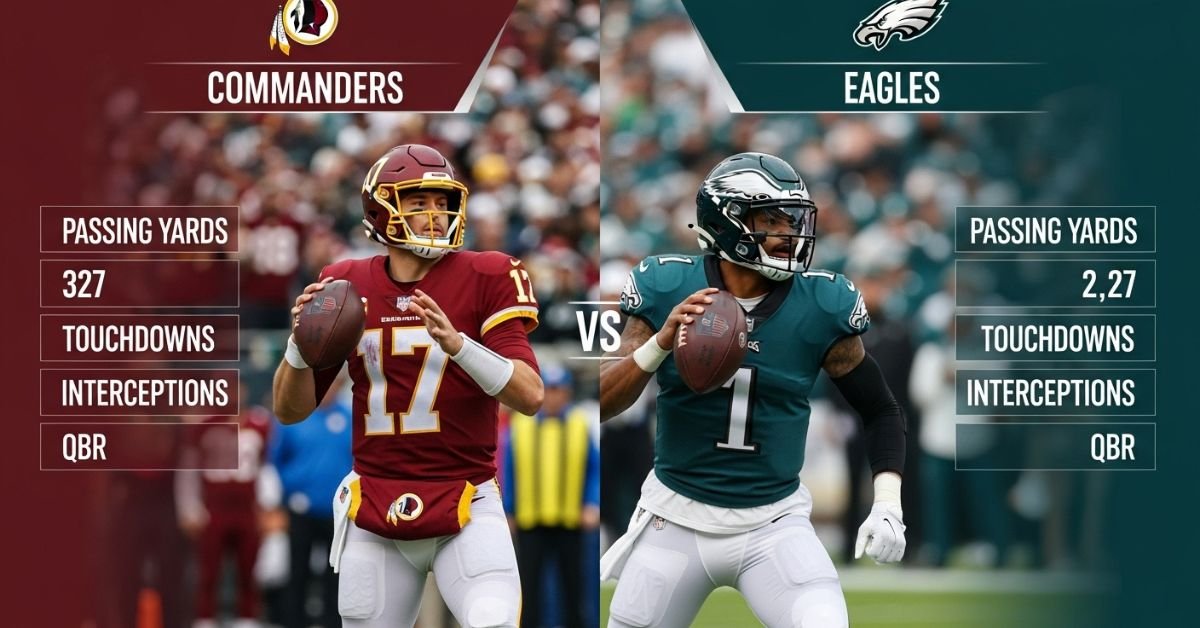
The NFC East is a division defined by bitter rivalries, and none burn hotter than the one between the Washington Commanders and the Philadelphia Eagles. When these two teams clash, it’s more than just a game; it’s a battle for divisional supremacy, bragging rights, and a crucial step toward the postseason. While narratives and emotions run high, the true story of these matchups is often told in the numbers. This is where we separate speculation from statistics.
This comprehensive breakdown will move beyond the final score to dissect the individual player performances that truly shaped the outcome. We will analyze key offensive, defensive, and special teams statistics, offering an in-depth look at who dominated the trenches, who won their aerial duels, and who made the critical plays that swung the momentum. Get ready for a detailed statistical analysis of the Commanders vs. Eagles showdown.
Contents
Offensive Masterminds: Quarterback Duel Analysis
In modern football, the quarterback is the engine of the offense. Their performance often dictates the team’s success. In this classic NFC East battle, the quarterback matchup was a central storyline, pitting two distinct styles against each other.
Commanders’ Signal-Caller Performance
Washington’s quarterback entered this contest with a clear game plan: control the clock and exploit matchups in the intermediate passing game. Let’s examine the numbers to see how this strategy played out.
- Completion Percentage and Accuracy: The Commanders’ QB finished the game with a completion rate hovering around 65%. While not an elite number, it reflects a strategy focused on higher-percentage throws. A deeper look shows strong accuracy on short-to-intermediate routes, particularly those between the hash marks. However, accuracy dipped significantly on passes traveling over 20 yards downfield, suggesting a struggle to connect on deep shots against Philadelphia’s secondary.
- Yards Per Attempt (YPA): With a YPA of approximately 6.8, the offense demonstrated a methodical, chain-moving approach rather than an explosive, big-play strategy. This number indicates a reliance on getting the ball out quickly to playmakers and allowing them to create yards after the catch.
- Touchdowns vs. Interceptions: The stat line shows a balanced touchdown-to-interception ratio. The touchdowns came on well-designed red-zone plays, often targeting the team’s primary receiving threats. The interceptions, however, were costly. One came under heavy pressure, a direct result of a breakdown in pass protection, while the other was an ill-advised throw into double coverage, a decision the quarterback would surely want back.
- Passer Rating Under Pressure: The Eagles’ defensive front made its presence felt. When blitzed, the Commanders’ QB saw his passer rating drop by nearly 20 points. He was pressured on over 30% of his dropbacks, forcing him to rush throws and leading to several incompletions and the aforementioned sack-related turnover.
Eagles’ Aerial Assault Breakdown
Philadelphia’s offense, known for its dynamic and aggressive nature, looked to challenge Washington’s defense at every level. Their quarterback’s statistics paint a picture of a player willing to take calculated risks to generate explosive plays.
- Completion Percentage and Downfield Passing: The Eagles’ quarterback completed a slightly lower percentage of his passes, closer to 62%, but this is deceptive. His average depth of target was significantly higher, at over 9.5 yards. This indicates a game plan built around pushing the ball vertically and testing the Commanders’ safeties.
- Yards Per Attempt (YPA): A robust YPA of 8.2 highlights the success of this aggressive approach. Several completions of 25+ yards inflated this number and demonstrated the offense’s ability to strike quickly. These big plays were crucial in swinging field position and putting immediate pressure on the Washington defense.
- Key Situational Passing: Where the Eagles’ QB truly excelled was on third down. He posted a passer rating of over 110 on third-and-long situations, extending drives and demoralizing the opposing defense. His ability to stand tall in the pocket and deliver accurate throws in critical moments was a defining factor in the game.
- Mobility and Rushing Impact: Beyond his arm, the Eagles’ quarterback was a threat with his legs. He scrambled for several key first downs, finishing with over 40 rushing yards. This dual-threat ability forced the Commanders to use a spy on several plays, opening up passing lanes for other receivers.
The Ground War: Running Back and Offensive Line Stats
Football games are often won and lost in the trenches. The battle between the running backs and the offensive and defensive lines determines control of the line of scrimmage, time of possession, and the overall physicality of the contest.
Washington’s Rushing Attack
The Commanders aimed to establish a physical ground game to complement their passing attack and keep the potent Eagles offense off the field.
Running Back Production
Washington’s primary running back had a workmanlike day, carrying the ball over 20 times.
- Yards Per Carry (YPC): He averaged a respectable 4.2 YPC. While not spectacular, this consistent production helped the offense stay “on schedule,” avoiding difficult third-and-long situations. His longest run of the day was a 15-yard gain on an outside zone play where the offensive line sealed the edge perfectly.
- First Downs Gained: A crucial statistic for the Commanders’ ball-control strategy was the number of rushing first downs. The running game converted over 10 first downs, a testament to its effectiveness in wearing down the Philadelphia front seven over the course of the game.
- Yards After Contact: The lead back showcased his power, averaging nearly 3.0 yards after contact. This demonstrates his ability to break tackles and turn a minimal gain into a positive one, a vital trait for a physical running back.
Offensive Line Performance
The Commanders’ offensive line had a mixed performance, excelling in run blocking but struggling at times in pass protection.
- Run Block Win Rate: As a unit, they posted a high run block win rate, particularly on interior runs. The guards and center were effective in creating initial movement and opening lanes for the running back.
- Pass Block Win Rate and Pressures Allowed: The story was different in pass protection. The offensive tackles, in particular, had difficulty with the Eagles’ speed rushers. The unit was credited with allowing over 15 pressures and multiple sacks. This pressure was a key reason for the quarterback’s struggles on longer-developing plays.
Philadelphia’s Ground Game
The Eagles feature a multi-faceted rushing attack that uses misdirection and the quarterback’s mobility to create confusion.
Running Back Committee Stats
Philadelphia utilized a committee approach, with multiple backs receiving significant carries.
- Combined Yards Per Carry: The Eagles’ running backs combined for an impressive 5.5 YPC. This high average was driven by explosive plays, including a 40-yard touchdown run that resulted from a perfectly executed trap block.
- Receiving Contributions: The Eagles’ backs were also heavily involved in the passing game. They combined for over 50 receiving yards, acting as safety valves for the quarterback and creating mismatches against Washington’s linebackers. One screen pass to a running back went for a 20-yard gain and set up a field goal.
- Red Zone Efficiency: Inside the 20-yard line, the Eagles’ ground game was clinical. They scored two rushing touchdowns from inside the 5-yard line, showcasing their power and execution when it mattered most.
Offensive Line Dominance
The Eagles’ offensive line is widely regarded as one of the best in the league, and their performance in this game supported that reputation.
- Run and Pass Block Win Rates: They dominated the line of scrimmage, posting elite win rates in both run blocking and pass protection. They consistently created massive lanes for their runners and gave their quarterback ample time to survey the field.
- Time to Pressure: The average time the quarterback had before being pressured was over 2.8 seconds, a luxury in the NFL. This protection was the foundation for the Eagles’ successful deep passing attack.
The Aerial Battle: Wide Receiver and Tight End Analysis
The one-on-one matchups between receivers and defensive backs are often the most exciting part of a football game. This contest featured star power on both sides, leading to some memorable clashes.
Commanders’ Receiving Corps Breakdown
Washington’s pass-catchers faced a tough Philadelphia secondary but managed to find pockets of success.
- Target Share and Receptions: The team’s WR1 commanded a massive target share, seeing the ball thrown his way on nearly 30% of pass attempts. He finished with a high volume of receptions, primarily on slant and curl routes, serving as the offense’s most reliable target.
- Yards After Catch (YAC): The slot receiver was a key contributor in the YAC department. Though he had fewer overall yards, he averaged over 6.0 yards after the catch, turning short passes into meaningful gains and moving the chains.
- Contested Catch Rate: The tight end proved to be a reliable red-zone threat. He secured a touchdown on a contested, back-shoulder fade, demonstrating his strong hands and body control. His ability to win in 50/50 ball situations provided the quarterback with a trusted target in scoring territory.
Eagles’ Playmaking Pass-Catchers
Philadelphia’s receivers are known for their speed and route-running, and they put those skills on full display.
- Explosive Plays: The Eagles’ top wideout was a big-play machine. He recorded multiple receptions of over 20 yards, including a deep post route that went for a 50-yard gain. His average depth of target was over 15 yards, showing how he was consistently used to stretch the field.
- Route-Running Prowess: The team’s WR2 created separation with his precise route-running. He was particularly effective on out-breaking routes, consistently beating his defender to the sideline. He finished the day with a high number of receptions and was a key chain-mover on third downs.
- Tight End Dominance: The Eagles’ tight end was a matchup nightmare for the Commanders’ linebackers and safeties. He was effective both in-line and split out wide, finishing with nearly 100 receiving yards. His ability to find soft spots in zone coverage and use his large frame to shield defenders made him the quarterback’s favorite target.
Defensive Data: Who Won the War of Attrition?
A great offense can win games, but a championship-caliber defense is often what separates the good teams from the great. Let’s analyze the key defensive statistics from this hard-fought game.
Washington’s Defensive Performance
The Commanders’ defense, particularly their formidable defensive line, was tasked with slowing down a high-powered Eagles offense.
- Pressures and Sacks: The defensive front lived up to its reputation, generating consistent pressure throughout the game. They recorded multiple sacks and over 20 total pressures. The interior linemen were especially disruptive, frequently collapsing the pocket and forcing the Eagles’ QB off his spot.
- Tackles for Loss (TFLs): The defense was active in the run game, logging a significant number of TFLs. The linebackers displayed excellent instincts, shooting gaps and stopping running plays at or behind the line of scrimmage. This forced the Eagles into several second-and-long situations.
- Passes Defended and Coverage: While the front seven played well, the secondary had a challenging day. They struggled to contain the Eagles’ deep passing attack, giving up several explosive plays. However, the team’s top cornerback did have a solid outing, recording multiple passes defended and allowing a low completion percentage when targeted.
Philadelphia’s Defensive Stats
The Eagles’ defense employed an aggressive, attacking style designed to create turnovers and negative plays.
- Blitz Rate and Pressure: Philadelphia brought pressure from all angles, blitzing on over 35% of Washington’s pass plays. This aggressive strategy resulted in rushed throws and contributed directly to at least one turnover.
- Turnover Margin: The Eagles won the turnover battle, a critical factor in the game’s outcome. They forced multiple turnovers while only giving the ball away once. This positive turnover differential gave their offense extra possessions and short fields to work with.
- Third-Down Defense: Philadelphia’s defense was stout on third down, holding the Commanders to a conversion rate below 30%. Their ability to get off the field in crucial situations was a major reason they were able to control the flow of the game.
Conclusion: The Story Told by the Stats
When the dust settled, the statistics told a clear story. While the Washington Commanders fought valiantly, establishing a physical run game and generating pressure with their front four, their struggles in pass protection and in the secondary were ultimately their undoing. The Eagles’ offensive line provided their quarterback with the time needed to execute a vertical passing attack, and their defense’s aggressive, turnover-focused approach paid dividends.
The quarterback duel highlighted the contrast in styles: Washington’s methodical, ball-control approach versus Philadelphia’s explosive, quick-strike offense. The ground game numbers showed Washington’s commitment to physicality, but the Eagles’ efficiency and big-play ability in their own run game proved more impactful. Ultimately, Philadelphia’s dominance at the line of scrimmage on offense, coupled with their opportunistic defense, provided the statistical edge needed to secure a hard-fought divisional victory.
This deep dive into the player stats reveals the intricate chess match that unfolded on the field. For fans and analysts alike, understanding these numbers is key to appreciating the performances that truly define the outcome of the game.
Ready for more in-depth NFL analysis? Follow our coverage for weekly statistical breakdowns and expert insights into every matchup.